(NEAR) FUTURE DEVELOPMENTS IN MEDICAL EYE CARE
It’s starting to become more well-known that optometrists are the people to see when you have any kind of problem with your eyes, not just ones that can be fixed with glasses. Optometrists routinely prescribe medication to treat eye infections, injuries and inflammations, and recent changes at Alberta Health mean that we will soon be able to treat glaucoma. For these reasons, our doctors at MVO are naturally interested in new and upcoming medically-based technologies that will enable them to better care for their patients. Here are a few of them you may be interested in learning about.
Corrective Surgery for Reading Problems
Most who have undergone LASIK or other types of laser eye surgery know that they will likely have increasing dependence on glasses as they get older. This is due to the effects of aging on the lens of the eye. New types of corrective surgery are being tested that are designed to address this problem. These include lasers that shape the cornea differently than conventional ones, giving concentric circles of varying magnifying power. Also, there are new surgeries being developed that involve implanting a lens in behind the eye or into the cornea to accomplish the same effect.
Dropless Therapy
Lots of conditions are managed by eye drops, including dry eyes, glaucoma, and allergies. Some of these require ongoing use of eye drops, which are inconvenient at best and in some cases, such as with our elderly patients who have arthritis, just about impossible to put in. Currently being tested and used is a contact lens-based drop delivery method: a special contact lens would be applied to the surface of the eye which would administer the required therapy on a time-release basis.
Contact Lens Blood Sugar Measurement
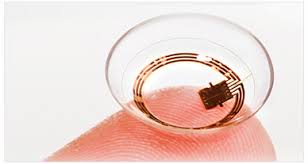
Just about all of us know someone who has diabetes. Part of effective diabetes treatment is ongoing testing of blood sugar. This involves a finger prick to release a small amount of blood which is tested via a hand-held sensor. The thin layer of tears that coats the front of our eyes can also be tested for blood sugar, and currently in development is another special type of contact lens containing microchips and sensors to be used for diabetic patients. When worn, it would increase the accuracy and reduce the discomfort that goes along with management of diabetes, resulting in improved overall health of those with this condition.
Drops for Macular Degeneration
Macular degeneration is the most common cause of acquired (not since birth) vision loss for those over 65 in Canada. Good diet, vitamin supplements, UV protection and not smoking are the current treatments for the most common, or “dry” form of macular degeneration. Several pharmaceutical companies are working on eye drops that have a similar effect as the vitamins on protecting the macula and reducing the progression of the disease with better visual outcomes.
We will update you on a regular basis as these and other new medical technologies become approved for use in Canada.
- Wilk