TATTOOS LINKED TO EYE INFLAMMATION IN SOME
A recent investigation about a rare condition called “tattoo-associated uveitis” has elevated the level of concern for those contemplating this type of cosmetic service. While it’s uncommon, being informed helps you understand the risks, protect your eye health, and know when to seek care. Read on for more details.
What is tattoo-associated uveitis?
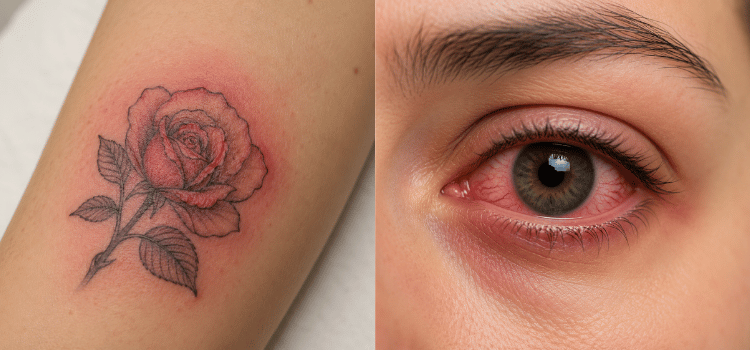
- Uveitis is inflammation of the uvea, the middle layer of the eye, and can cause pain, redness, light sensitivity, blurred vision, and sometimes vision loss if not properly treated.
- Tattoo-associated uveitis occurs when the immune system reacts to certain tattoo inks. In rare cases, this immune response is linked to inflammation in the eye.
- In the reported cases, people noticed a combination of inflamed tattoos (raised, itchy, tender skin) and eye symptoms such as redness, light sensitivity, and pain.
How common is it?
- It is quite rare. However, ophthalmology and optometry specialists are increasingly recognizing that there can be a connection between a tattoo and eye inflammation in some individuals.
- Estimates from international reports suggest dozens of cases across regions, with some doctors noting families or communities may have more instances than first thought. Ongoing data collection in Canada is beginning to better understand local patterns.
What this means for you
- Most people with tattoos will never develop eye inflammation from their ink.
- If you notice unusual eye symptoms, especially after getting a tattoo or after a change in your existing tattoo (raised, itchy, tender skin around the tattoo) together with eye pain, light sensitivity, or blurred vision, seek prompt eye care.
- Certain tattoo inks may contain components that can provoke an immune reaction in some individuals. The safety of inks varies by product and manufacturer.
What to watch for (symptoms that warrant evaluation)

- Eye pain, redness, tearing, or light sensitivity
- Blurred vision or a noticeable change in vision
- A tattoo area that becomes raised, inflamed, itchy, or tender
- Pushing through symptoms without treatment can lead to more serious eye damage
What doctors are looking for
- The body developing an immune response affecting the eye (uveitis) in the context of tattoo ink exposure
- Distinguishing tattoo-associated uveitis from other causes of eye inflammation
- Treatments may include anti-inflammatory eye drops, injections, or other medications; some cases may require systemic therapy or long-term management in collaboration with rheumatology or immunology teams
Important safety notes about inks

- Tattoo inks can contain heavy metals and other compounds. The quality and ingredients vary by ink and by how and where the tattoo is done.
- It’s wise to choose a reputable artist and ask about ink ingredients when possible. If you notice ink reactions or eye symptoms, share this information with your eye care professional.
What Canadian doctors are doing
- Eyecare teams are continuing to monitor and collect data on tattoo-associated uveitis to understand how common it is and how best to prevent and treat it.
- If you have a tattoo and are worried about eye health, tell your optometrist or ophthalmologist about any skin reactions around the tattoo and any new vision changes.
What this means for your eye health routine
- Routine eye checks remain essential for everyone. Regular eye exams help detect inflammation or other eye conditions early.
- If you have a tattoo and begin experiencing eye symptoms, don’t delay – arrange an assessment from an MVO optometrist. Early treatment improves outcomes.
Practical tips you can use now
- If you’re planning a tattoo: choose a reputable studio, ask about ink ingredients, and keep an eye on any skin or eye changes afterwards
- If you notice new eye symptoms: contact your eye care professional promptly. Early assessment is important.
- Protect your eyes: wear sunglasses with UV protection in bright light and take breaks from screens to reduce strain, especially if light sensitivity is present.
- Report changes: tell your eye doctor about any recent tattoos or changes to existing tattoos during visits.
Reference:
Tattoo risks: What is uveitis?

Written by Dr. Tom Wilk
About the Author:
Dr. Tom Wilk sees patients at his Cochrane location primarily. He developed the “Patient First” approach now adopted by all Doctors and staff at Mountain View Optometry. He obtained his Doctor of Optometry (OD) from the Michigan College of Optometry in 1994, and his B.Sc. from the University of Waterloo. A native of Toronto, Ontario, he came to Alberta in 1998, attracted by the opportunity to start an optometry practice in the only province that allowed ODs to practice within the full scope of their training.