Vision Problems After a Concussion: Symptoms That Require an Eye Exam
Our optometrists often encounter patients of all ages who have recently been diagnosed with a concussion following an incident related to sports, or an accident resulting from normal daily activities. Concussion can affect more than memory and balance. It can also change how your eyes focus, move, and work together.
You may notice blurry vision, headaches, light sensitivity, dizziness, or difficulty keeping your place while reading after a concussion. These symptoms can make it harder to work, study, drive, or use digital screens comfortably.
A comprehensive eye exam can help identify whether your visual system has been affected by the concussion and guide the next steps in your recovery.
How a Concussion Can Affect Your Vision
Vision depends on constant communication between your eyes and brain. After a concussion, this connection may be disrupted, even when the eyes themselves appear healthy.
Symptoms may appear immediately or become more noticeable when you return to reading, screen use, school, work, driving, or other visually demanding activities.
Blurry or Fluctuating Vision
Your vision may become blurry at near, far, or both distances. It may also worsen as the day continues or during reading and computer work.
An eye exam can help determine whether the blur is related to a change in your glasses or contact lens prescription, eye health, focusing ability, or eye coordination.
Double Vision
Double vision may appear as two separate images, shadowed text, or overlapping words. It can make reading, walking, and driving more difficult.
New or worsening double vision should be assessed promptly by an optometrist.
Light Sensitivity
Bright sunlight, fluorescent lighting, headlights, and digital screens may feel uncomfortable after a concussion.
Light sensitivity can contribute to headaches, fatigue, and difficulty performing normal daily activities. A personalized assessment can help identify practical ways to improve comfort.
Headaches and Difficulty Reading
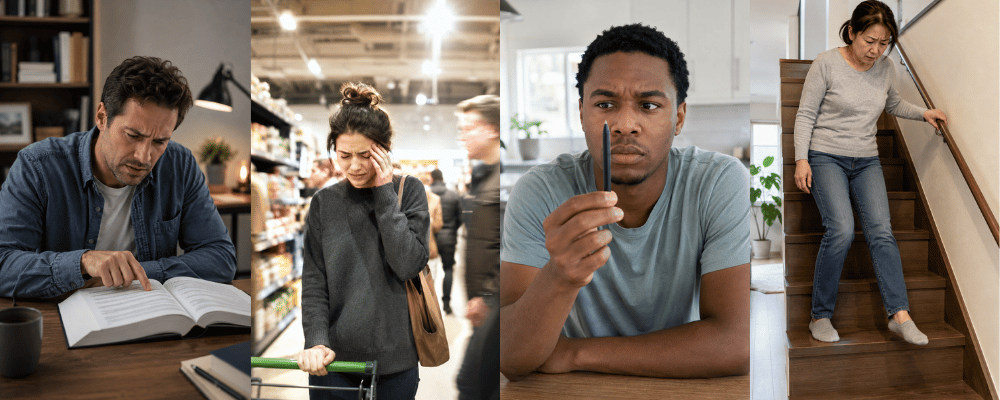
Reading, computer work, or phone use may trigger headaches, blurry vision, or difficulty keeping your place. You may skip lines, reread sentences, or find it harder to concentrate.
These symptoms may be linked to problems with focusing, tracking, or keeping both eyes aligned. Identifying the cause and applying the appropriate treatment can make school, work, and screen use more comfortable.
Dizziness in Busy Environments
Grocery stores, crowds, scrolling screens, or moving vehicles may cause dizziness or nausea.
This can happen when the visual and balance systems are not working comfortably together.
Changes in Depth Perception
You may misjudge stairs, curbs, distances, or moving objects. This can affect walking, engaging in sports, and driving confidence.
When Should You Book an Eye Exam?
Consider booking a comprehensive eye exam when symptoms:
- Continue for more than a few days
- Worsen during reading or screen use
- Interfere with work, school, or driving
- Include blurry vision, double vision, or light sensitivity
- Cause headaches, dizziness, or eye strain
You should not wait until symptoms become severe. Early assessment and treatment can help you return to daily activities more comfortably.
What Happens During a Post-Concussion Eye Exam?
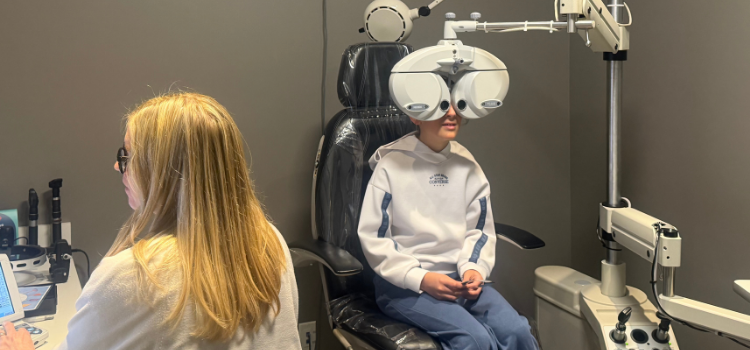
A post-concussion eye exam include more than reading letters on a chart.
Your optometrist will perform tests to assess:
- Visual clarity and prescription
- Eye health
- Pupil responses
- Focusing ability
- Eye alignment and coordination
- Tracking and eye movements
- Depth perception
Recommendations depend on your symptoms and examination results. They may include changes to your prescription, visual breaks, lighting adjustments, workplace or school accommodations, specialized lenses and tints, and vision therapy.
Vision Problems in Children After a Concussion

Children may suffer from concussion after participating in a sporting activity. They may not always be able to articulate their symptoms.
Parents and teachers may notice:
- Irritability during close-up work
- Losing place on a page
- Reduced concentration
- Avoiding reading or homework
- Closing or covering one eye
- Headaches during visual tasks such as reading or digital screen use
- A decline in reading performance, or falling behind on assignments/homework
An eye exam can help determine whether vision has been affected by the concussion, and whether specialized treatment is required.
When to Seek Emergency Care
Urgent care following an episode of head trauma should be sought for any of the following symptoms:
- Sudden vision loss
- A difference in pupil size
- A severe or worsening headache
- Repeated persistent vomiting
- Increasing confusion
- Slurred speech
- Weakness or numbness
- A convulsion or seizure
- Loss of consciousness
- Difficulty waking up/extreme drowsiness
Book an Eye Exam
Blurry or double vision, headaches, light sensitivity, dizziness, and reading difficulties after a concussion should not be ignored.
A comprehensive eye exam can help identify visual problems, rule out eye health concerns, and provide practical recommendations based on your needs.
Book a comprehensive eye exam with our optometry team today.
FAQ:
Can a concussion change my glasses prescription?
Yes. Often a temporary change is needed to treat a focusing or eye teaming disorder that results from a concussion.
Can vision therapy help after a concussion?
Possibly. Depending on the diagnosis and nature of the vision disorder, vision therapy may be an appropriate solution for some.
Can vision symptoms return after I start feeling better?
Yes. Those suffering from concussion will recover at different rates. While generally as time progresses, symptoms improve, they can be persistent or recurring for some.

Written by Dr. Tom Wilk
About the Author:
Dr. Tom Wilk sees patients at his Cochrane location primarily. He developed the “Patient First” approach now adopted by all Doctors and staff at Mountain View Optometry. He obtained his Doctor of Optometry (OD) from the Michigan College of Optometry in 1994, and his B.Sc. from the University of Waterloo. A native of Toronto, Ontario, he came to Alberta in 1998, attracted by the opportunity to start an optometry practice in the only province that allowed ODs to practice within the full scope of their training.