Why People With Diabetes Need Regular Eye Exams
If you have diabetes, regular eye exams are an important part of protecting your vision.
Diabetes can affect the small blood vessels in the retina, the light-sensitive tissue at the back of your eye.
A regular diabetic eye exam allows us to check for early signs of eye disease, monitor changes over time, and recommend treatment or referral when needed.
How Can Diabetes Affect Your Eyes?
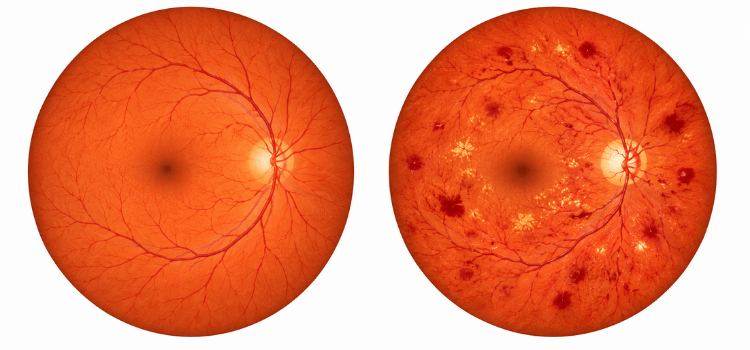
One of the most common diabetes-related eye conditions is diabetic retinopathy. It develops when diabetes damages the small blood vessels in the retina.
In the early stages, diabetic retinopathy may not cause noticeable symptoms. As it progresses, it can lead to blurry vision, floaters, or loss of vision.
Diabetes can also increase the risk of other eye conditions, including:
- Diabetic macular edema
- Cataracts
- Glaucoma
- Fluctuating or blurry vision
Why You Should Not Wait for Vision Changes
Clear vision does not always mean your eyes are healthy.
Some diabetes-related eye changes can develop silently. You may still be able to read, drive, and work comfortably while changes are happening inside the eye.
Early detection can lead to closer monitoring or treatment before vision is significantly affected.
What Happens During an Eye Exam for Diabetes?
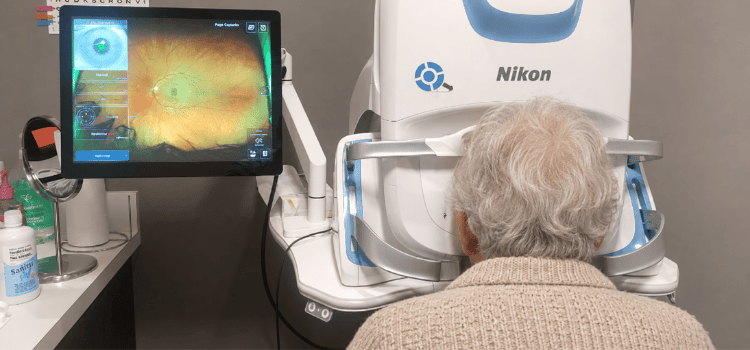
An eye exam for diabetes examines both your vision and the health of your eyes.
We will:
- Review your blood sugar readings and relevant medical history
- Check your vision and prescription
- Examine the retina and blood vessels
- Dilate your pupils when appropriate
- Take retinal photographs
- Take an OCT scan to check for small areas of swelling or bleeding in the retina
Retinal photographs and OCT scans are especially helpful because along with providing a detailed image to check for signs of diabetic eye disease, the images are stored for future reference. We can compare images over time and look for subtle changes - early diagnosis improves outcomes.
How Often Should People With Diabetes Have an Eye Exam?
How often those with diabetes need an eye exam depends on several factors - how long you’ve had diabetes, the type (type 1 or 2), the stability of your blood sugars, whether any retinopathy is present, and any other contributory eye or systemic health conditions.
Those diagnosed with diabetes, or “pre-diabetes”, should have a comprehensive eye exam as soon as possible. From there our optometrists will advise a follow-up schedule based on the initial findings. Most patients with diabetes are seen annually, with pupils dilated at each visit to provide the clearest possible view of the retinas. We may recommend more frequent exams if diabetic eye changes are already present or if you have other risk factors.
Keeping up with regular eye exams provides peace of mind. Since symptoms of early retinopathy often do not show up for several months or even years, knowing your eye health is being monitored by a qualified professional, with up-to-date technology often provides relief from worry or anxiety.
If you have diabetes, Book your eye exam today and make eye care part of your regular diabetes management plan.
FAQ:
Should I get new glasses if my blood sugar is changing?
Your optometrist will be able to provide advice on whether new glasses are advisable. Large swings in blood sugar may cause temporary changes to your eyeglass prescription – but please do not postpone your eye exam – any sudden change in vision needs to be checked as soon as possible.
Does pregnancy affect diabetic eye health?
It can. Hormonal changes during pregnancy may cause fluctuations in blood sugar levels, increasing the risk of eye health complications. It may also cause your body to become more resistant to insulin.
Can diabetic eye disease affect only one eye?
Yes. Diabetes-related changes can be more noticeable or more advanced in one eye than the other.

Written by Dr. Tom Wilk
About the Author:
Dr. Tom Wilk sees patients at his Cochrane location primarily. He developed the “Patient First” approach now adopted by all Doctors and staff at Mountain View Optometry. He obtained his Doctor of Optometry (OD) from the Michigan College of Optometry in 1994, and his B.Sc. from the University of Waterloo. A native of Toronto, Ontario, he came to Alberta in 1998, attracted by the opportunity to start an optometry practice in the only province that allowed ODs to practice within the full scope of their training.